Smelting
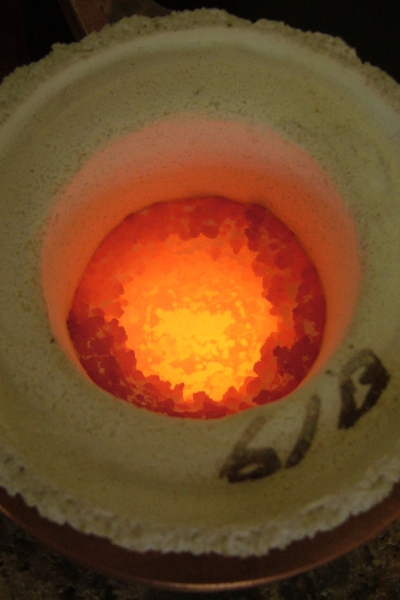
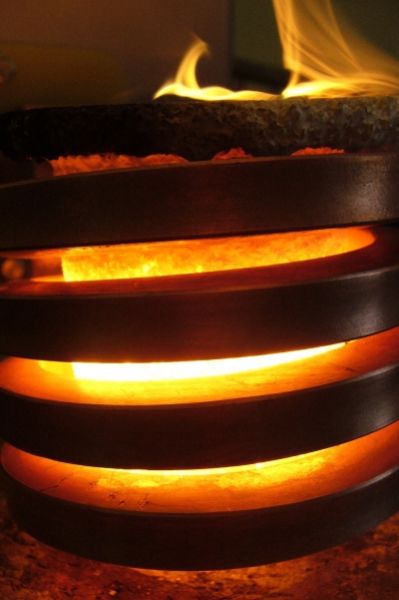
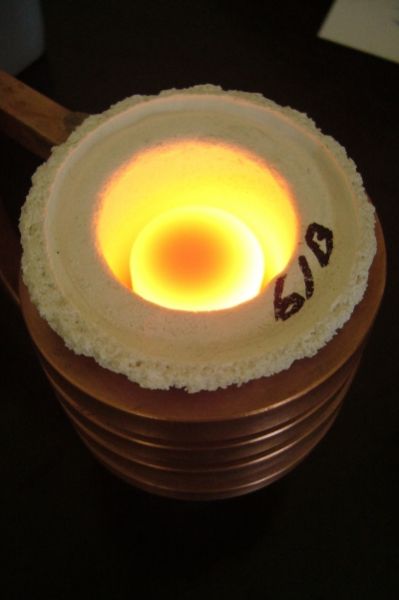
Induction heating has proven to be highly effective for the melting of metals and glass. In direct comparison to conventional furnace heating, the induction process is significantly cleaner, safer, and more cost-efficient.
How induction melting works
A high-frequency magnetic field generates eddy currents directly in the metal or in the conductive crucible material. The heat is therefore generated directly in the material being melted, rather than via a flame or heating element. This enables short melting times, good mixing of the melt through the inductive stirring effect, and precisely controllable temperature management.
Advantages over flame and resistance furnace melting
- Fast melting – the energy acts directly in the material instead of via detours
- Clean process – no open flame, no combustion fumes on the workpiece
- Good mixing – the inductive stirring effect produces a homogeneous melt
- Precise temperature control – important for sensitive alloys and laboratory applications
- Compact systems – suitable for laboratory use, small batches and standalone workstations
Typical applications
Induction melting is used for precious metals and non-ferrous metals as well as for melting glass for scientific and materials research purposes. Typical fields of use include laboratory and small-batch melting for material analysis, sample melts ahead of series production, and applications in research and testing where reproducible melting temperatures are required.
FAQ on induction melting
Which materials can be melted by induction?
In principle, all electrically conductive metals, including precious metals such as gold and silver as well as non-ferrous metals such as copper, brass and aluminum. For melting glass, a conductive crucible is typically used to transfer the heat to the glass.
How large are the melt quantities that can be processed?
This depends on crucible size, power and frequency of the system. We design the system to match the required melt quantity, from small laboratory amounts to larger batches.
Is induction melting suitable for laboratory applications?
Yes, precisely because of its precise and reproducible temperature control, induction melting is frequently used in research, materials testing and for sample melts.
Planning a melting application? Talk to us – we will show you which system and which crucible match your material and melt quantity.