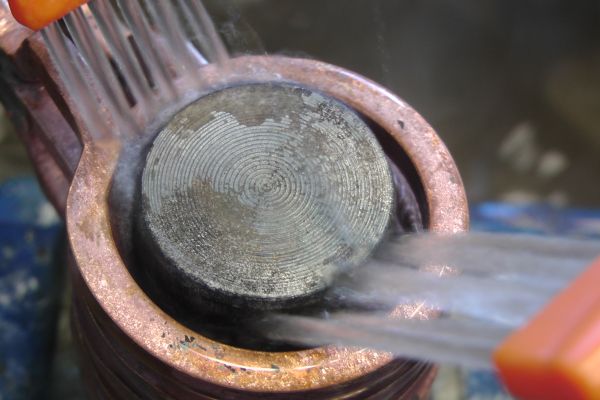
Hardening
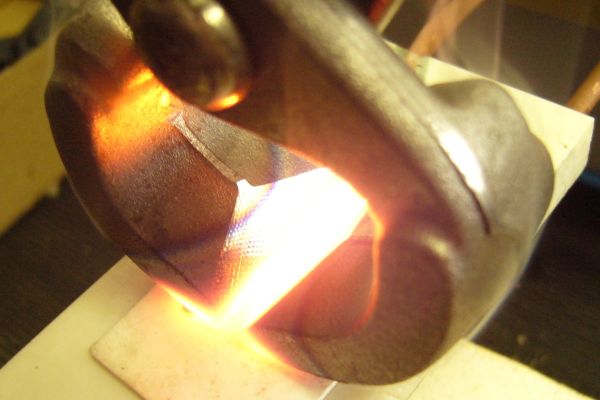
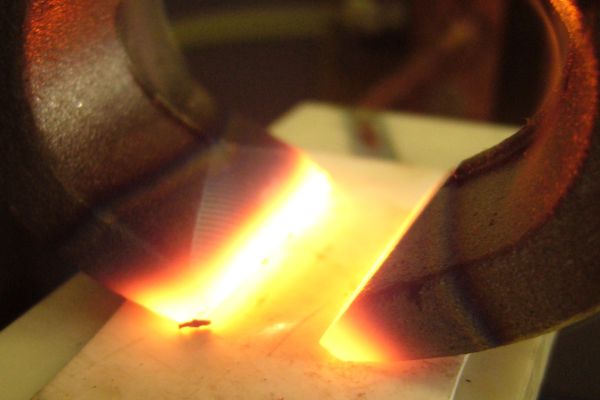
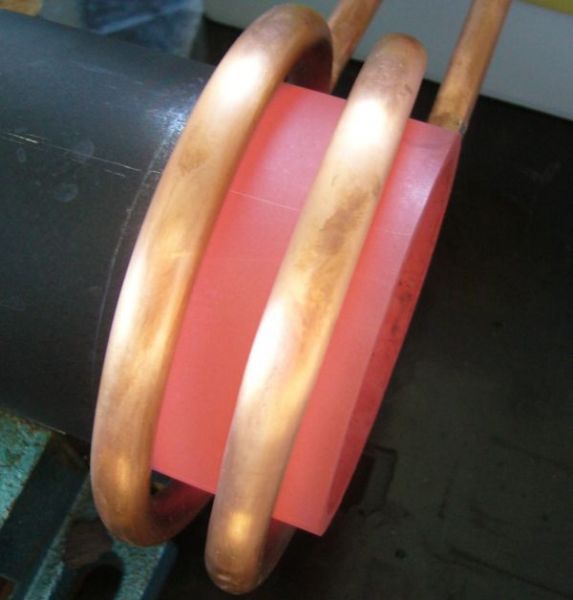
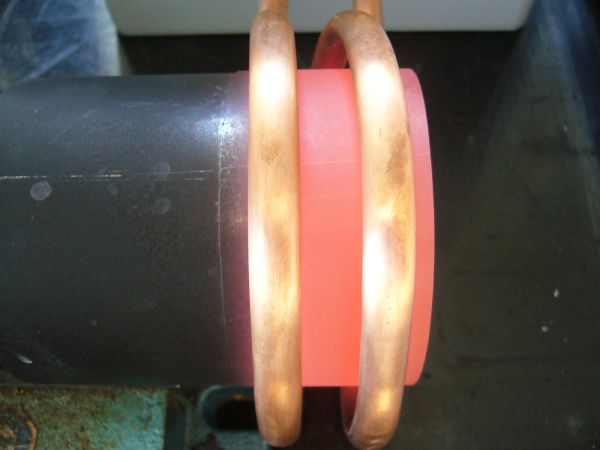
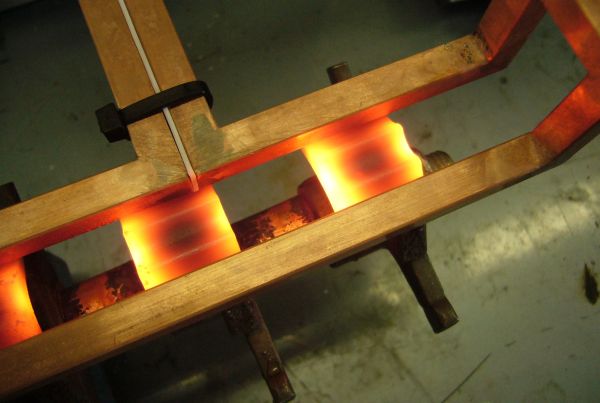
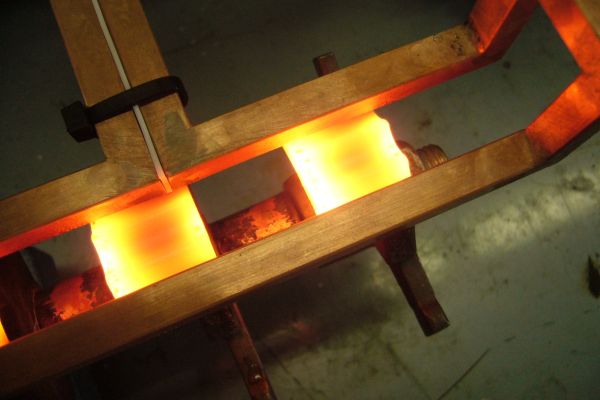
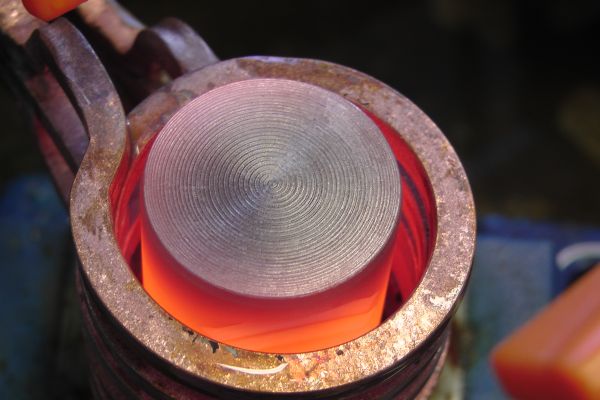
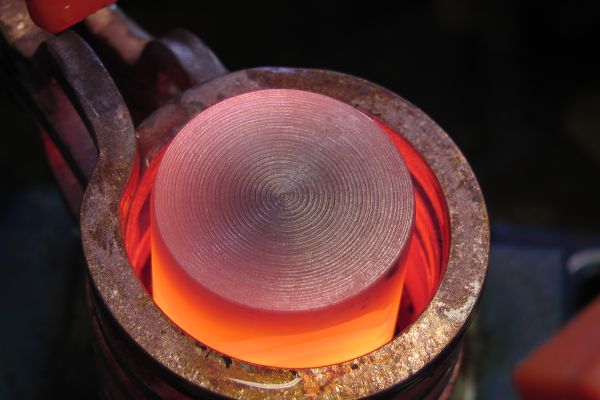
Induction hardening is primarily used for the hardening of bearing surfaces, shafts, and complexly shaped components where only specific areas require heating.
The operating frequency of the induction heating system determines the depth of heat penetration. Depending on the process requirements, the hardened area can be cooled in air, with water, or using a special hardening emulsion. Each cooling medium results in a different degree of hardness.
Induction hardening can be implemented as either a manual or an automated solution, and it can also be integrated into a continuous production process.
Why induction case hardening?
- Targeted hardening zone – only the stressed area is hardened, the core stays tough and fracture-resistant
- Short process times – heating is fast and localized, resulting in short cycle times in series production
- Reproducible results – temperature, holding time, and quenching can be precisely controlled and documented
- Low distortion – localized heating keeps the component geometry more stable than furnace processes
- Energy efficiency – only the zone actually required is heated, not the entire component or furnace chamber
Typical components and industries
Induction hardening is used wherever components need a hard, wear-resistant surface combined with a tough core. Typical examples include shafts, pins, gears, guideways, camshafts, and tools. Our customers include companies from tool and machine building as well as the automotive industry, where components must withstand high cyclic loads and wear.
How a hardening project works with us
- Clarify component and requirements, material, geometry, desired hardening zone and depth
- Design frequency and inductor, matched to penetration depth and component shape
- Sample runs, determine and document parameters for temperature, holding time and quenching medium
- Integration, as a standalone workstation or automated continuous-flow solution
- Quality verification, on request including hardness testing and microstructure analysis
FAQ on induction hardening
How deep does induction hardening typically go?
The hardening depth depends on the selected frequency, power and holding time. Higher frequencies produce a shallower, more surface-focused penetration depth, while lower frequencies act deeper into the component. We design the frequency to match the required hardening depth and material.
How does induction hardening differ from case hardening in a furnace?
In furnace processes, the entire component is heated; with induction hardening, only the zone that actually needs it is heated. This saves energy, shortens cycle time, and reduces distortion, since the rest of the component stays cooler.
Can distortion be avoided in induction hardening?
Distortion can be significantly reduced through a suitable inductor design, a controlled heating rate, and an appropriate quenching medium. How much a component distorts also depends on geometry, material, and the stress state before hardening.
Can you also supply automated series production systems?
Yes. In addition to manual standalone workstations, we supply automated continuous-flow and custom systems, including PLC control, recipe management, and optional data logging for quality documentation.
Planning a hardening project? Talk to us – we will show you, based on your component, which frequency, inductor and quenching medium will achieve the result you need.