Flux-free, oxide-free and reproducible brazing
In vacuum brazing, parts are heated to brazing temperature inside an evacuated chamber. With no oxygen present, no oxides form – so no flux is required. The result is clean, high-strength brazed joints without flux residues and usually without any rework.
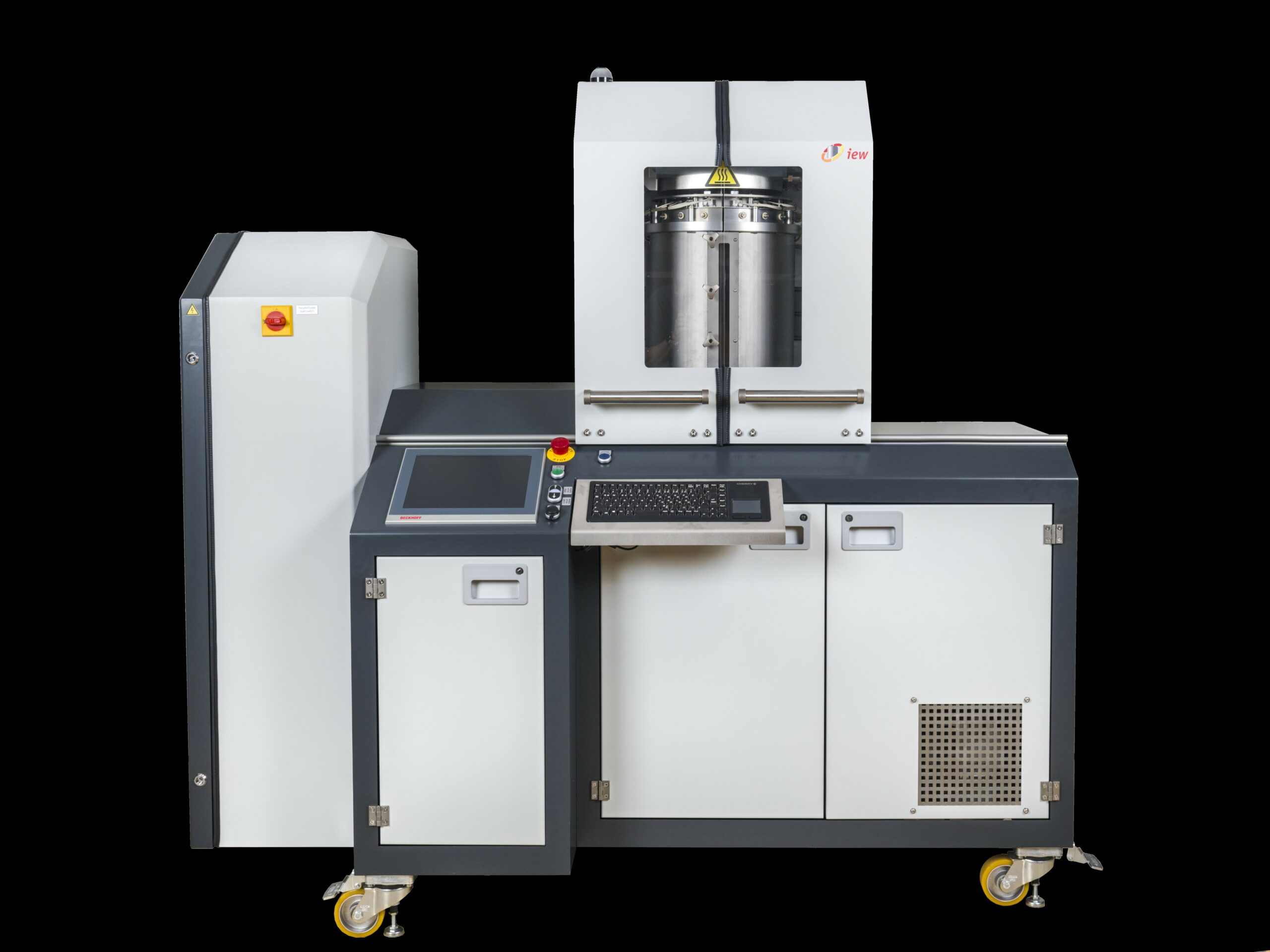
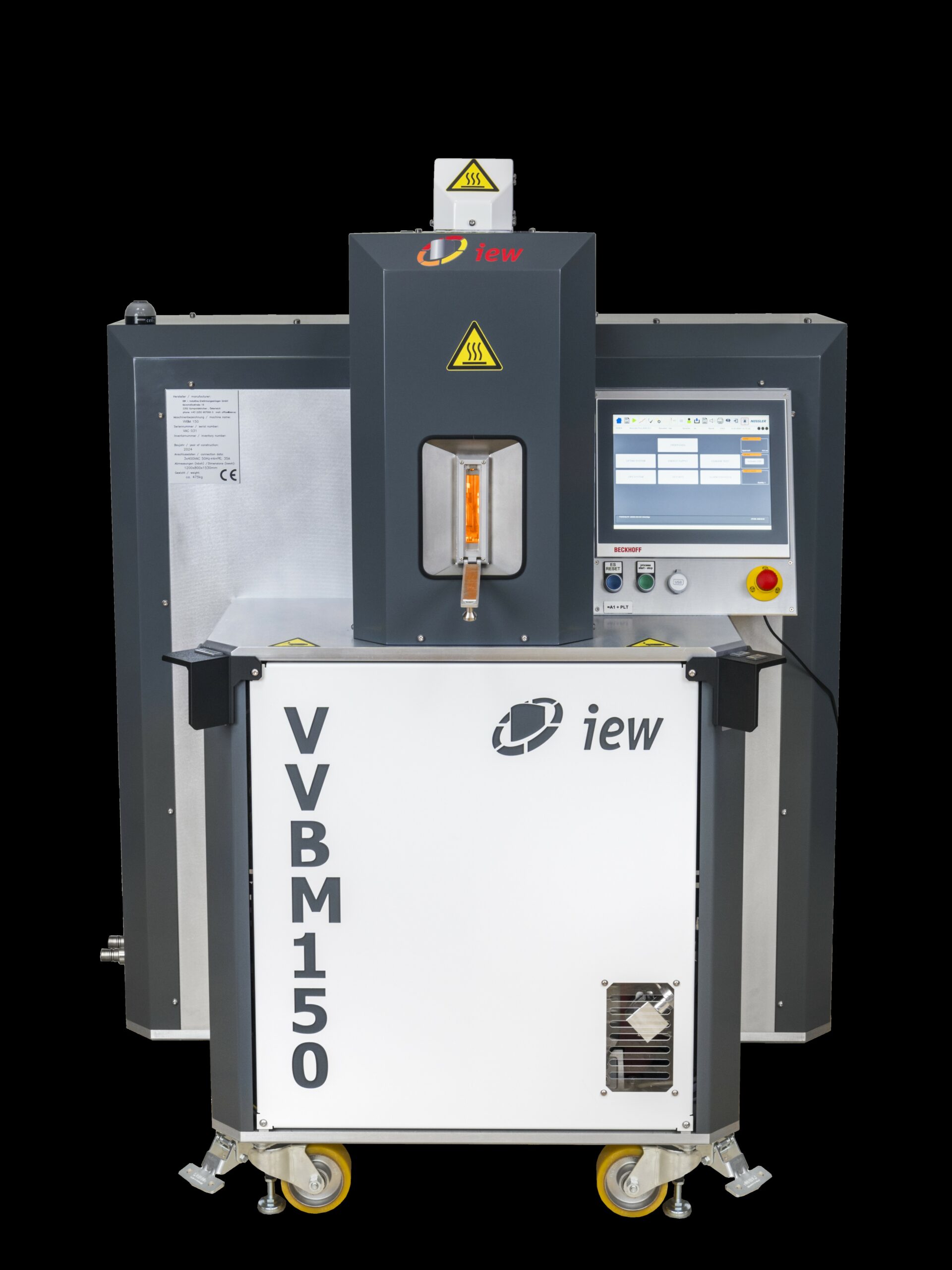
IEW has been developing and building induction heating and brazing systems since 1996. Since 2018 we have been manufacturing our own vacuum brazing machines – the VVBM series (Vertical Vacuum Brazing Machine). More than 35 machines are now in operation worldwide, from small tool shops to series production.
Advantages of vacuum brazing
- No flux and no electroplating: no residues, no corrosion, no cleaning after brazing
- Oxide-free, bright surfaces – no tarnish, no discoloration
- High joint strength and tightness thanks to excellent wetting
- Reproducible results through controlled temperature, ramp and holding times
- Hundreds of parts per batch – ideal for cutting inserts and tools
Typical applications and materials
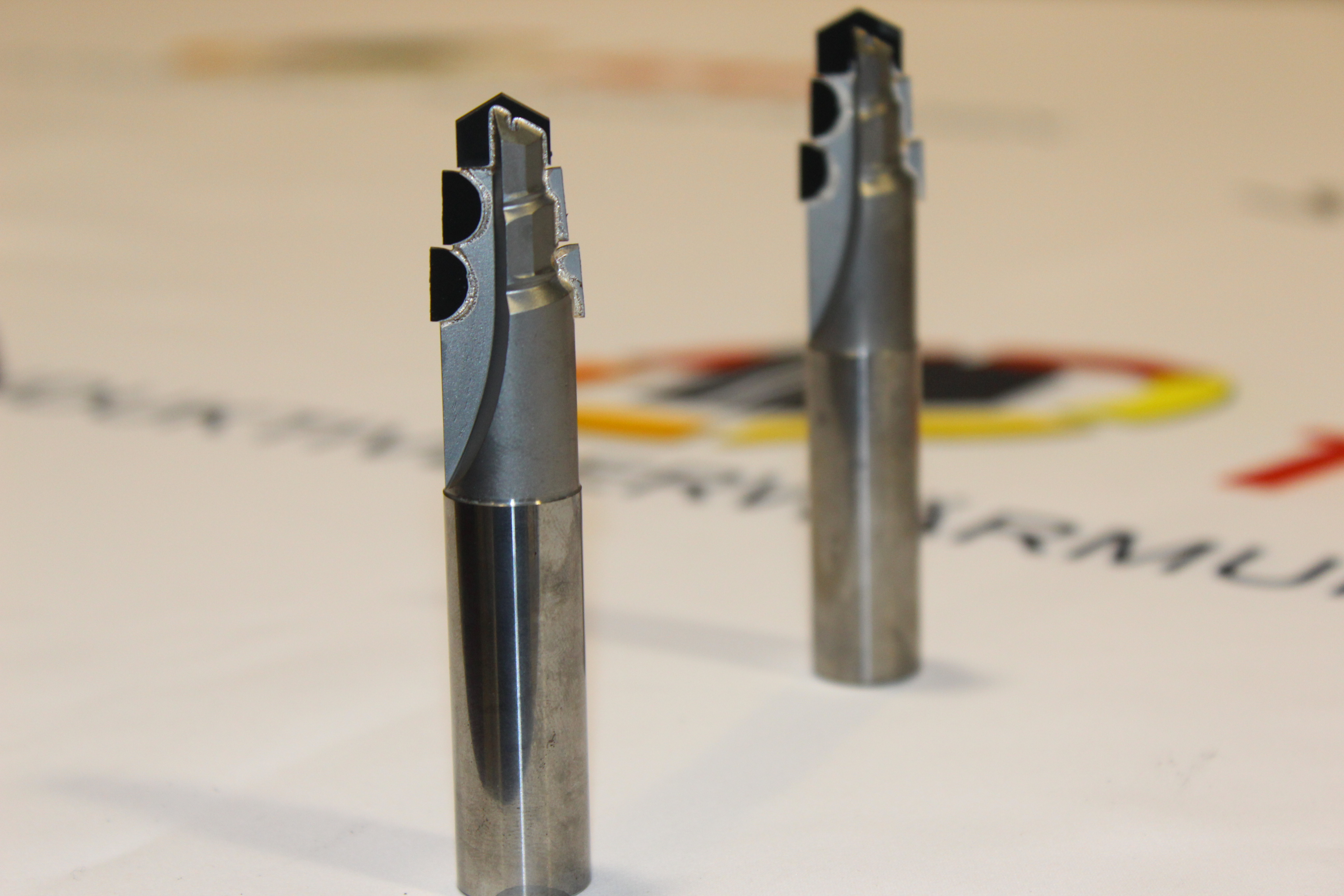
- Cutting tools: indexable inserts, milling cutters and drills with PCD, CBN, MCD or CVD cutting edges as well as carbide tools
- Diamond tools: flux-free brazing of diamond grit as an alternative to electroplated and sintered bonds
- High-temperature brazing of ceramics and ceramic composites
- Medical technology: components with implant-compatible surfaces
- Precision parts, prototyping and series production
Vacuum brazing machines VVBM150 and VVBM200
The vertical design of the VVBM series makes far better use of the chamber volume than horizontal systems:
- Up to 800 PCD indexable inserts per batch (VVBM200) on up to 14 levels spaced approx. 25 mm apart
- Patented 3-zone temperature control with homogeneity below 10 °C – PCD (below 700 °C) and CBN/CVD (above 800 °C) in a single run
- Quartz glass vacuum chamber without metal parts – no risk of contamination, with viewing window for live process observation
- Short cycles: under 90 minutes from loading to unloading
- Resume function: after a power or cooling water failure, the machine continues the cycle exactly where it was interrupted – no lost batch
- VVBM200 with partial pressure control to prevent silver outgassing from active brazing alloys and optional nitrogen cooling
- Low operating costs: approx. €4–8 per cycle for power, compressed air and vacuum; energy consumption is logged and unused zones can be switched off
- Fully automatic control, remote maintenance via VPN, freely adjustable heating and cooling ramps
The VVBM150 (heating zone 240 mm) is the compact solution for smaller volumes, the VVBM200 (heating zone 360 mm) the machine for series production. Technical details of the VVBM150 / VVBM200 →
Contract brazing, process development and fixtures
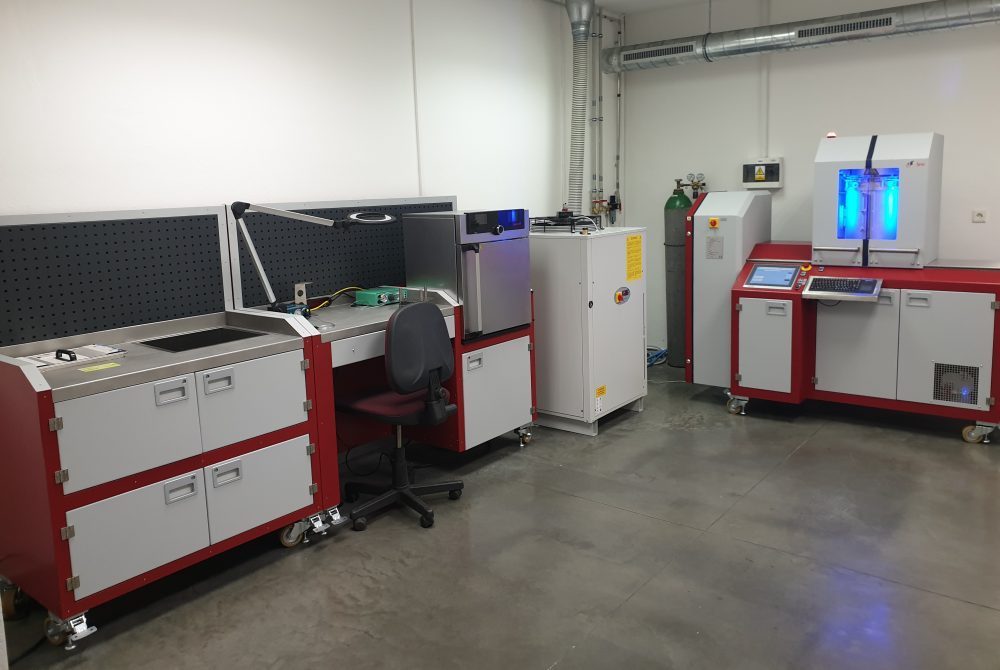
Don’t have your own machine (yet)? IEW offers contract vacuum brazing on its own VVBM machines – from single batches to series production. Our engineers advise you on brazing alloy selection and process parameters and build custom, stackable fixtures for your inserts and tools.
Research: placing every diamond grain precisely
In the VaBriDia research project, IEW is working with Fraunhofer IPA and industrial partners on a process in which brazing paste is micro-dosed, diamond grit is applied evenly in a fluidized bed and then vacuum brazed – without electroplating and without flux. The goal: long-life grinding tools, e.g. for machining coated brake discs.
Vacuum brazing or induction brazing under inert gas?
- Vacuum brazing: uniform heating, very many parts per batch, flux-free – ideal for cutting tools and multi-edge tools with high demands on reproducibility.
- Induction brazing (also under inert gas): localized heating in seconds, easy to automate – ideal for tubes, assemblies and individual tools.
Because IEW builds both technologies, we give you unbiased advice on the right process.
Free brazing test with your parts
Send us your parts – we will run a free application test and show you the result, cycle time and the right solution: your own machine or contract brazing. Contact us now.
Frequently asked questions about vacuum brazing
Is flux required for vacuum brazing?
No. The vacuum prevents oxides from forming, so no flux is needed. Parts come out clean and do not need to be cleaned after brazing.
Can I braze PCD and CBN in the same batch?
Yes. Thanks to the three independently controlled heating zones of the VVBM, tools with different brazing temperatures – e.g. PCD below 700 °C and CBN/CVD above 800 °C – can be brazed in a single run.
How long does a vacuum brazing cycle take?
A complete VVBM cycle – from loading through heating, brazing and cooling to unloading – takes under 90 minutes.
What does a brazing cycle cost?
Operating costs for power, compressed air and vacuum are approx. €4–8 per cycle, depending on the electricity price.
Does IEW offer contract brazing?
Yes. We braze your parts on our own VVBM machines – ideal for testing, small series or as a bridge until you have your own machine.
Trade press on the VVBM series
- IEW Vakuumlötanlagen – Wenn jedes Korn sitzt (indiamond.world, 2026, German)
- Diamant trifft Präzision (indiamond.world, 2025, German)
- Innovative vacuum brazing technology for high-performance diamond tools (indiamond.world, 2025, German)